Why your heat pump is steaming on a frosty morning
Most of the time, the cloud around your outdoor unit is water vapor from a routine defrost, and a few clues tell you when it is something more.
October 16, 2026 · 4 min read
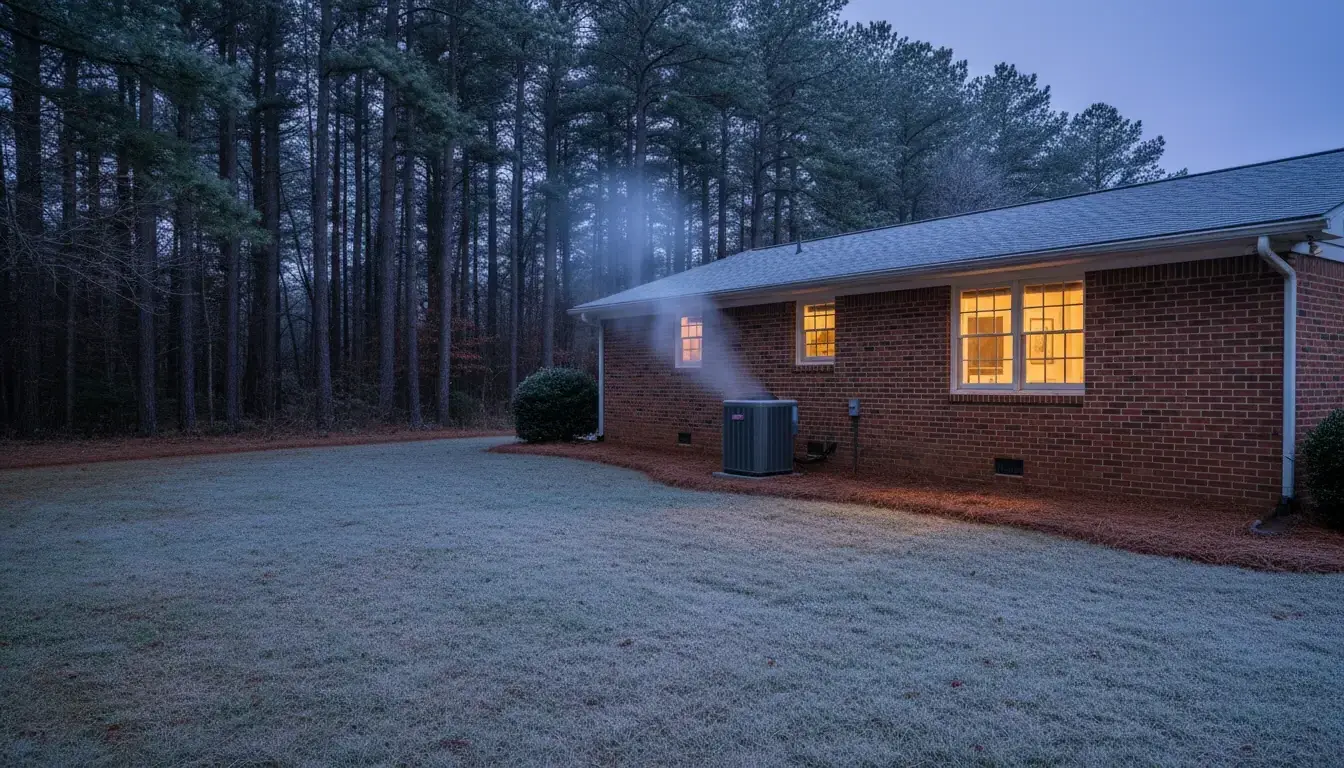
You pour a coffee, glance out the window, and the outdoor unit is wrapped in a white cloud. On a frosty morning in the Upstate, that sight sends plenty of homeowners straight to the phone. Most of the time, the cloud is the heat pump doing exactly what it was built to do. Sometimes it is a hint that something needs a technician. The trick is knowing which one you are looking at, and the clues are easy to spot once you know them.
What is actually happening outside
A heat pump heats your home by pulling heat out of the outdoor air and moving it inside. That works even when the air feels cold, because there is still heat in it to collect. The side effect is that the outdoor coil runs colder than the air around it. When the coil drops below freezing and the air carries moisture, frost builds up on the fins, the same way it does on the walls of a freezer.
A thin layer of frost is not a problem on its own, but a thick layer blocks airflow and cuts how much heat the coil can collect. To clear it, the system runs a defrost cycle. In general terms, the unit briefly reverses its refrigerant flow so the outdoor coil warms up, and the outdoor fan usually stops while this happens. The frost melts, and the warm, wet coil releases a burst of vapor into the cold air. That is the steam. It looks dramatic, but it is mostly water vapor from melting frost, not smoke and not a refrigerant leak.
Because the cycle borrows heat to warm the outdoor coil, some systems switch on backup heat inside the house for a short while so the air from your vents does not turn noticeably cool. You may also hear a change in sound, a hiss or a whoosh, as the system moves in and out of defrost. Those noises are typical too.
Signs the steam is normal
Here is a quick way to judge what you are seeing. Normal defrost usually looks like this:
- The vapor appears for a few minutes, then stops and the unit returns to its usual running sound.
- The outdoor fan pauses during the cloud and starts again afterward.
- The coil is mostly clear of ice once the cycle finishes.
- Your home keeps heating, even if the air from the vents feels a bit cooler for a short stretch.
- It happens now and then on cold, damp mornings, and much less on dry ones.
Frosty, humid mornings are the classic setup. Dry cold produces less frost and fewer defrost cycles, while cold with fog or drizzle produces more. If your unit steams on a damp morning and has quieted down by the time you leave for work, that is a healthy pattern.
When it is not normal
Some things deserve a call. A unit encased in a thick block of ice, with ice covering the fan opening or the refrigerant lines, is not defrosting properly. A cloud that never ends, a fan that sits still while the coil stays frozen, or a house that keeps getting colder while the outdoor unit looks like a snowbank are all signs of a problem. In general, the usual suspects are a failed defrost control or sensor, a stuck reversing valve, low refrigerant from a leak, or airflow trouble such as a blocked coil.
Pay attention to smell and sound as well. A burning smell, loud grinding or buzzing, or oily residue on the cabinet or the lines is different from water vapor and should be looked at promptly. If the steam comes with a system that is clearly not heating the house, treat it as a real service call rather than waiting to see if it clears up by itself.
What you can safely do, and what to leave alone
A few steps are safe for any homeowner. Make sure nothing is piled against the unit. Leaves, drifted snow, a stray cover or mulch pushed up against the cabinet all restrict airflow and make frost worse. Check that your indoor filter is not clogged, since poor airflow indoors strains the whole system. Keep the ground around the outdoor unit open so air can move freely, then watch the pattern for a day or so and note when it steams and for how long.
Leave the rest alone. Do not chip ice off the coil with a screwdriver or a hammer. The fins and copper tubing are thin and easy to puncture, and a punctured coil is a serious repair. Do not pour hot water over the unit, since it can refreeze on the metal and make things worse, and do not open the cabinet. Testing a defrost control, a sensor or a reversing valve takes the right gauges and training, and it involves electrical power and pressurized refrigerant.
If your heat pump is steaming and you are not sure what you are seeing, Johnson Heating & Air Conditioning can take a look. The company has served the Spartanburg area for over 28 years, services all brands, and works on heat pumps from installation to repair. Call (864) 579-3247. If the house is losing heat after hours or on a weekend, emergency service is available.
Johnson Heating & Air Conditioning, LLC, (864) 579-3247
Call (864) 579-3247More articles
Heat pump blowing cold air in winter: what to check before you call
A few simple settings and conditions explain most cool-air complaints, and knowing them helps you tell a quick fix from a real service call.
Repair or replace an old furnace or heat pump
The right answer depends on age, repair history and how the house feels, and a few questions help you compare a repair with a new system fairly.