When a commercial rooftop unit goes down
A business owner can safely check a few things from the ground, and knowing what to leave to a technician protects both people and equipment.
October 16, 2026 · 4 min read
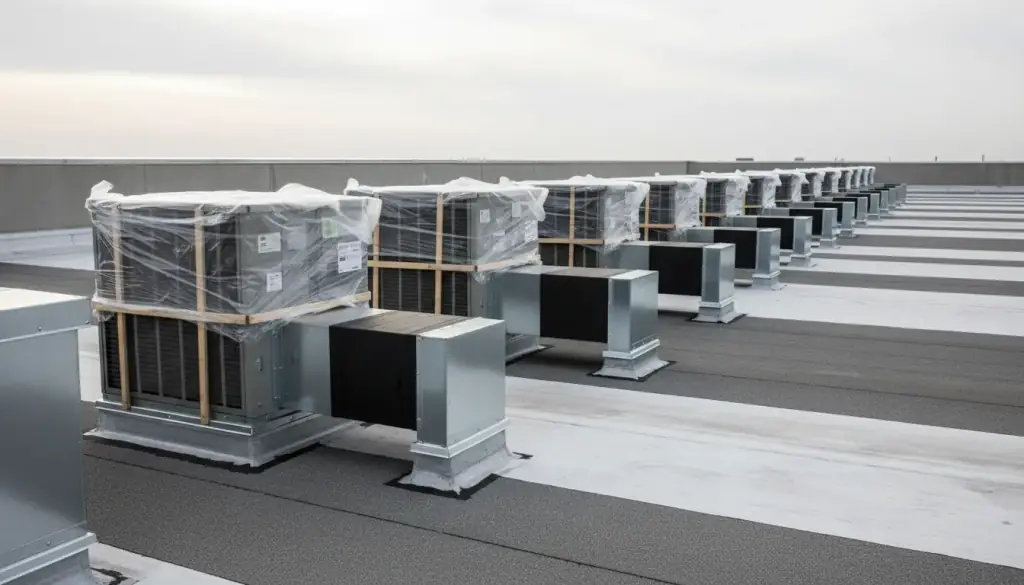
When the rooftop unit goes down in a shop, office or restaurant, the trouble shows up fast. Customers get uncomfortable, staff get short with each other, and in some businesses stock or equipment can suffer when the temperature climbs. The impulse is to get up on the roof and sort it out yourself. Resist that. There are, however, things a business owner or manager can check safely from the ground, and knowing them can save a service call or at least make the call faster and more useful.
Checks you can make from the ground
Start at the thermostat or building controller. Confirm it is set to the right mode, cool or heat, that the set point makes sense for the conditions, and that a schedule has not switched the system to an unoccupied setting. Programmable controls get bumped, and a holiday schedule left in place is more common than you would expect. If the display is dim or blank, replace the batteries.
Next, check power. Look at the breaker panel for a tripped breaker labeled for the unit. If you find one, reset it one time. If it trips again right away, leave it off and call, because repeated trips mean something is wrong, and forcing it can damage equipment.
Finally, look at the airflow inside the space. Are the supply registers blowing at all? Are the returns blocked by stock, boxes or furniture? Is the filter clogged, if it can be reached from inside? Weak airflow in the space with a unit that sounds like it is running often points to a filter or blower issue, and that is useful information for the technician.
What to note before you call
A few minutes of observation makes the first visit more productive. Jot down the following before you pick up the phone:
- What the thermostat or controller displays and what it is set to.
- Whether the unit is running, humming, clicking or completely silent.
- Whether air is coming from the registers, and whether it is warm or cool.
- Any recent power flicker, storm or work done on the building.
- Any error codes shown on the controller.
What to leave to a technician
Rooftop work carries real risks: falls, electrical shock, hot surfaces, spinning fans and refrigerant under pressure. A flat roof does not make it safe. Roof access also raises insurance and liability questions for your business. Leave panel removal, electrical testing, refrigerant work, gas connections and any repair at the unit itself to a certified technician. If you ever smell gas, leave the building and call the gas utility from outside. Do not flip switches on your way out.
Even small jobs like a blower belt, a contactor or a capacitor belong to someone who tests with a meter and knows how to lock out power safely. Taking a panel off a live unit is not the place to learn.
Why rooftop units go down
Commercial rooftop units live in the sun, rain, wind and debris. In general, common causes of breakdowns include clogged filters and coils, failed capacitors and contactors, worn blower belts or motors, condensate drains that back up and trip a safety switch, thermostat or control faults, and low refrigerant from a leak. Many of these build up gradually. A unit that has been short cycling, rattling or struggling to keep up for weeks is telling you something, and it is cheaper to listen early than to react during a rush.
Heating season brings its own failures on units that include gas heat, such as ignition problems and airflow limits. The pattern is the same: small signs first, then a breakdown on the busiest or coldest day.
A maintenance program changes the odds
The best time to deal with a rooftop unit is before it fails. A regular maintenance program means filters get changed, coils and drains get checked, belts and electrical parts get looked at, and small problems get caught on a calm day instead of during your busiest week. It also gives you a record of what has been done and what the technician expects to need attention next.
Keep your own notes as well: the model and serial number from the unit's data plate, the filter size, and the date of the last service. When a technician arrives and you can hand over those details, the visit goes faster.
Johnson Heating & Air Conditioning works on commercial systems, with installation, repair and maintenance, and offers maintenance programs. It serves both residential and commercial customers in the Spartanburg area, and it is fully certified, licensed, insured and bonded. If your rooftop unit has stopped, or you want to set up maintenance before it does, call (864) 579-3247. Emergency service is available after hours and weekends.
Johnson Heating & Air Conditioning, LLC, (864) 579-3247
Call (864) 579-3247More articles
Why your heat pump is steaming on a frosty morning
Most of the time, the cloud around your outdoor unit is water vapor from a routine defrost, and a few clues tell you when it is something more.
Heat pump blowing cold air in winter: what to check before you call
A few simple settings and conditions explain most cool-air complaints, and knowing them helps you tell a quick fix from a real service call.